Gentle Chiropractic Care in Penrith | Helping You Move Better and Feel More Confident
We help people with persistent back or neck pain move more freely, regain confidence, and get back to doing the things they love — gently, safely, and without forceful “cracking.”
About Your Penrith Chiropractor
At Your Spinal Health in Penrith, we specialise in gentle, low-force chiropractic care.
Our aim is simple: reduce pain, improve movement, and support your body’s natural healing.
Most people follow a short, structured plan over around 12 weeks and notice steady progress.
Everyone’s different, and results always vary — that’s why your care starts with a personalised Spinal Health Assessment.
Peter Bennett – Chiropractor
Registered with the General Chiropractic Council (Reg No: 01124)
Member of the United Chiropractic Association
Your Spinal Health
Registered chiropractic care in Penrith, Cumbria
5 Poets Walk, Penrith CA11 7HJ · 01768 899 036
Your Trusted Spinal Health Experts
At Your Spinal Health, we are passionate about helping you achieve your best health and well-being. We have been serving our community for over 20 years with a commitment to providing the highest quality care.
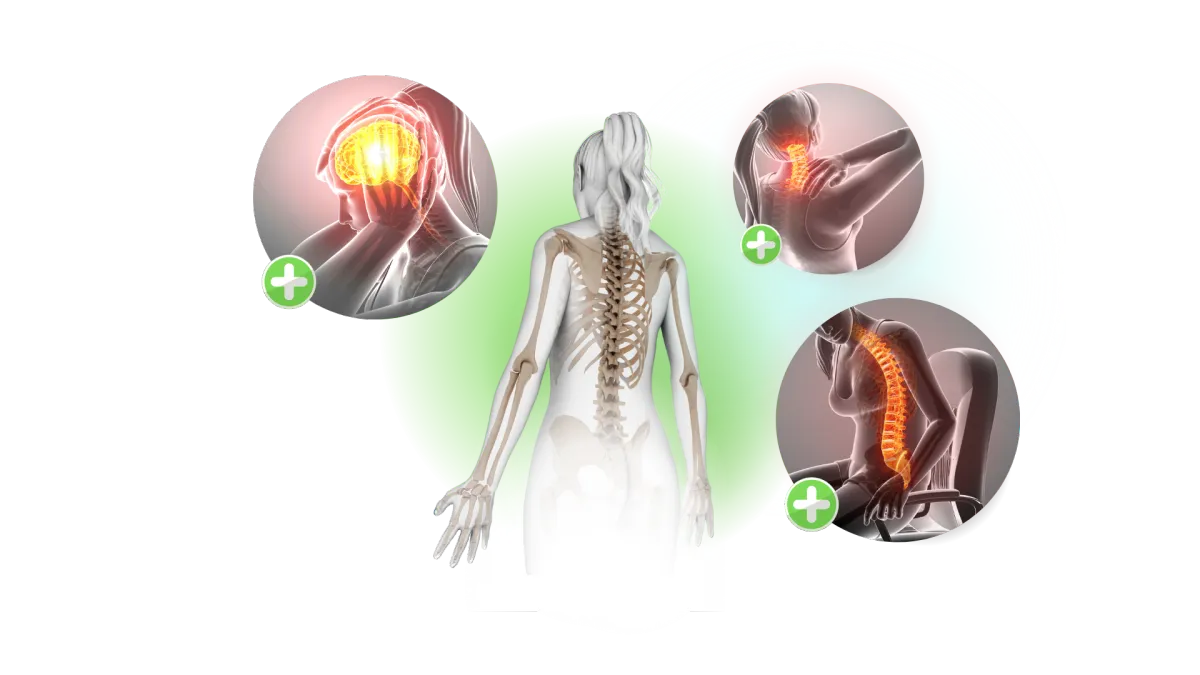
Combining natural hands-on treatment with our week-on-week progressive system to help symptoms like back pain, neck pain and headaches.
Start NOW. Just 1-click away
We help people feel safer and more confident moving again.
Save On Your Treatment Costs
Each visit is £50.
Save if you choose to pre pay.

Start NOW. Just 1-click away
Our clients tell us they can do more of what they enjoy once their pain is under control. Everyone’s different, and results vary.
Peter Bennett, Chiropractor – Registered with the General Chiropractic Council (Reg. No: 01124)
I'm Peter Bennett!
Hello, I’m Peter Bennett, a chiropractor based in Penrith, Cumbria.
I’ve spent more than 25 years helping people reduce pain, move better, and get more life back into their years.
My approach is gentle — no cracking, no heavy-handed adjustments — just safe, effective techniques that work with your body instead of against it.
Over the years, I’ve learned that the human body is incredibly good at trying to heal itself. My job is simply to understand what it’s trying to do and give it the right support.
People come to see me for all sorts of reasons — stiff backs after gardening, neck pain from long hours at a desk, or just feeling less steady than they used to.
Whatever brings you in, my goal is the same: to help you move more easily and feel more confident doing the things you love.
I believe great healthcare starts with kindness, clear explanations, and respect for each person’s pace. You’ll never be rushed or pressured here — just guided gently toward better movement and lasting results.
When I’m not in clinic, I’m usually outdoors walking in the fells, writing about longevity science, or creating online programs that help people stay active and independent later in life.

Why I Do This
When I first started in chiropractic, I thought the job was all about fixing spines.
But over the years, I’ve realised it’s really about helping people trust their bodies again.
I’ve seen how back pain can slowly chip away at someone’s confidence — the way they move, work, even how they laugh. One day it’s just a niggle, and before long it’s changed how they live. Helping someone turn that around, gently and safely, is still the best part of my week.
I’ve always believed the body isn’t broken — it’s doing its best to protect you. My role is to understand what it’s trying to do and guide it back toward balance. That might mean easing tension in the spine, retraining movement, or simply helping you breathe a little easier.
What keeps me going is seeing people realise they can do more than they thought — walking the fells again, picking up grandchildren, or just waking up without that constant stiffness.
It’s those moments that remind me why I chose this path all those years ago.
My aim has never been just to treat backs — it’s to help people move freely, live fully, and enjoy their years with confidence.
FAQS
What conditions can we help with?
Spinal health care can help a wide range of conditions, including back and neck pain, headaches, sciatica, joint pain, and even issues related to posture. It's not just about addressing the symptoms; it's about improving your overall health and well-being by improving the health of your spine and nervous system. If you have specific concerns or questions about your condition, please don't hesitate to ask for a consultation to discuss how spinal health care can benefit you.
Is spinal health care safe, and are the adjustments painful?
Spinal health care is generally considered safe when performed by trained professionals. The adjustments are typically not painful; in fact, many clients report feeling relief and improved mobility after an adjustment. Our therapists are highly skilled and will use gentle techniques tailored to your individual needs. Your comfort and safety are our top priorities, and we will explain every step of the process to ensure you feel at ease during your sessions.
How many visits will I need to see results?
The number of sessions you'll need depends on various factors, including the nature and severity of your condition, your overall health, and your treatment goals. Some clients experience relief after just a few sessions, while others may require more ongoing care. During your initial Spinal Health Assessment, we will assess your specific situation and provide a personalised treatment plan. Our goal is to provide efficient and effective care, so you can return to a pain-free and healthy lifestyle as soon as possible.
When should I see my doctor instead of a chiropractor?
Most back or neck problems are mechanical and respond well to gentle chiropractic care.
See your GP or call NHS 111 if you have fever, weight loss, cancer history, night sweats, recent trauma, numbness in the saddle area, bladder or bowel changes, severe unrelenting pain, or sudden weakness.
Call 999 immediately if you notice stroke signs —
Face drooping, Arm weakness, Speech changes, Time to call 999 (FAST) — or sudden dizziness, vision loss, or a severe new headache.
If you’re unsure, call us — we’ll help you decide the safest next step.
Latest Articles on Spinal Health
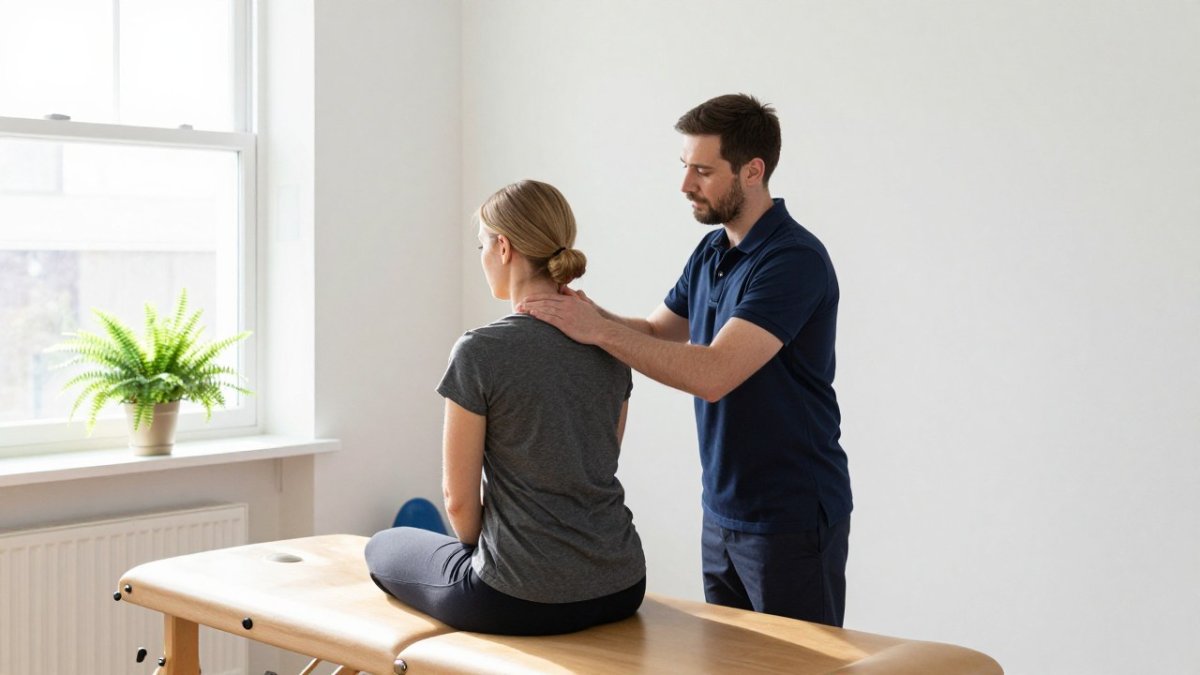
Pain on Right Side of Neck and Head: Causes and Relief
Quick Summary
Pain on the right side of the neck and head usually has a traceable cause, most often muscle tension, poor posture, an awkward sleeping position, or irritation of the neck joints and nerves. Right side neck pain that spreads to the head is often a cervicogenic headache, which starts in the neck but is felt behind the eye or temple.
- Muscle tension, posture and sleeping position are common causes of one-sided neck pain.
- Take movement breaks every 30 to 45 minutes and hold chin tucks for five seconds.
- Most mild neck strains settle within a few days to a few weeks.
- Call 999 or go to A&E for a sudden, severe headache or arm weakness.
Table of Contents
- Why Pain on the Right Side of the Neck and Head Happens
- Right-Sided Neck Pain Causes to Consider
- Neck Pain Relief Exercises and Self-Care Steps
- How Long Does Neck Pain Last and What to Expect
- When to Seek Help for Neck Pain and Headache
- Booking a Spinal Health Assessment in Penrith
- Frequently Asked Questions
Why Pain on the Right Side of the Neck and Head Happens
Pain on the right side of the neck and head is common, and it is rarely random, since a right side neck ache usually has a traceable cause. Your neck is a busy structure. It holds up your head, guides your nerves and carries blood to your brain. When one side is irritated, pain can travel up into the head and sometimes down into the shoulder or arm.
Here is the key point: one-sided pain usually has a mechanical or muscular story behind it, and it is often linked to how you use your body day to day. A clean scan does not mean nothing is wrong. Pain is often shaped by load, sleep, stress and how much recovery your body has had.
The short version: right-sided neck and head pain often comes from muscle tension, posture, or irritation of the neck joints and nerves that feed the head.
Right-Sided Neck Pain Causes to Consider
Several common causes can produce pain on one side. Knowing them helps you spot patterns in your own symptoms, but be careful not to read too much into the side alone, because a right side neck complaint can come from many sources. A right-sided pattern is common and usually reflects how you load your neck rather than a specific disease. Read how chiropractic care helped one person with years of weekly headaches in Cumbria. What matters more is the type of pain, what brings it on, and any associated symptoms.
Muscle strain and tension
Muscles on one side of the neck can tighten after a long day, a heavy bag carried on one shoulder, or sleeping in an awkward position. Tight muscles can pull on the joints and send pain up into the head. This is one of the most common causes of a dull, steady ache on one side. A common pattern is a tender point at the top of the shoulder or the base of the skull on the right, which eases with gentle movement and heat.
Poor posture and long periods of sitting
Leaning towards a screen or holding the phone to one ear puts steady strain on the neck. Over weeks, this load builds up. Many people who sit for long periods notice the ache grows worse by late afternoon. Small changes to your desk set-up often make a real difference. Watch out: if you only adjust your chair and ignore how long you sit without moving, the ache is likely to return.
Awkward sleeping position
Waking with a one-sided stiff neck is a classic pattern. A pillow that is too high or too firm can hold the neck bent to one side for hours. Most people find a pillow that keeps the head level with the spine, and a few gentle movements on waking, help more than forcing the neck to stretch.
Whiplash and other impact injuries
A sudden jolt, in a car, a fall, or a collision during sport, can strain the joints and muscles on one side. Pain may appear hours later and is often accompanied by headache and restricted movement. If the injury involved a blow to the head or loss of consciousness, seek urgent advice rather than waiting to see how it settles.
Cervical spine conditions, including disc degeneration
As the neck ages, the discs and joints can become worn. This does not always cause pain, but when it does it is often felt on one side and may spread to the shoulder or between the shoulder blades. A qualified professional can assess this through history and examination.
Nerve irritation or compression
A nerve in the neck can be irritated by a tight muscle, a narrowed space or a disc. This often produces pain that travels down the arm, sometimes with tingling or numbness in the hand. Right-sided arm symptoms with neck pain are a reason to seek a proper assessment rather than relying on stretches alone.
Cervicogenic headache and referred pain
A cervicogenic headache starts in the neck but is felt in the head. It is usually one-sided, starts at the back of the head and can spread towards the eye or temple. Referred pain works in a similar way: an irritated joint or muscle in the neck sends pain signals that the brain reads as coming from the head. A useful clue is that turning the head or pressing on the neck can reproduce the headache. When neck movement reproduces the pain, chiropractic neck adjustments may be one approach to discuss with a qualified practitioner alongside other ways of easing neck-related headaches.
If you are in Penrith and symptoms are persistent, your GP practice can advise on local NHS services; for urgent concerns outside normal hours, NHS 111 can direct you to appropriate care. Always check current service details rather than assuming a particular clinic is suitable.
Neck Pain Relief Exercises and Self-Care Steps
Gentle self-care can ease mild symptoms. Start slowly and stop if anything sharp or worsening appears.

- Take regular movement breaks. Stand up and move every 30 to 45 minutes.
- Do gentle chin tucks. Pull your chin straight back, hold for five seconds, and repeat five times.
- Stretch the side muscles. Tilt your ear towards your shoulder, hold for 20 seconds, then switch sides.
- Check your screen height. The top of the screen should sit at or just below eye level.
- Use a supportive pillow. Your head should stay level with your spine while you sleep.
Stop any exercise that causes sharp pain, numbness or tingling.
The steps below summarise the self-care advice in the order it is given, with timing where the article states it.
| Step | What to do | Time or frequency |
|---|---|---|
| Movement breaks | Stand up and move | Every 30 to 45 minutes |
| Chin tucks | Pull chin straight back, hold | Hold five seconds, repeat five times |
| Side stretch | Tilt ear towards shoulder | Hold 20 seconds, switch sides |
| Screen height | Top of screen at or below eye level | Set once, check during the day |
| Supportive pillow | Keep head level with spine | Every night while sleeping |
How Long Does Neck Pain Last and What to Expect
Most mild neck strains settle within a few days to a few weeks when you reduce strain and keep moving gently. Pain that lasts longer, keeps returning or spreads into the arm often needs a proper assessment.
Recovery is rarely a straight line. Some days will feel better than others, and that is normal. Keep a simple note of what helps and what makes the pain worse. This gives you useful information to share with a practitioner.
When to Seek Help for Neck Pain and Headache
Not all neck and head pain needs the same response. It helps to separate three levels of concern.
Call 999 or go to A&E now if you have any of the following:
- A sudden, severe headache unlike any you have had before
- Weakness, numbness or loss of power in an arm or hand, or difficulty walking
- Trouble speaking, double vision, confusion or problems with balance
- Fever with a stiff neck, or a rash that does not fade when pressed
- Pain after a significant fall or injury to the head or neck, especially with loss of consciousness
Seek prompt advice from a GP or NHS 111 if you have:
- Pain that is worsening despite a few days of gentle self-care
- Pain spreading into the arm with tingling or numbness
- A headache that keeps returning on the same side
- Neck stiffness with feeling generally unwell
Routine self-care and reassessment is reasonable for mild, familiar aches that are easing with movement and rest. Most minor neck strains settle within a few days to a few weeks (the NHS). Keep a simple note of what helps and what makes it worse; if symptoms persist beyond two to three weeks, recur, or affect sleep and work, arrange a structured assessment.
If you are in Penrith, your GP practice is the usual first point of contact for non-urgent neck pain. NHS 111 can advise when services are closed. Check current local service details rather than assuming a particular clinic is appropriate for your symptoms.
Medication safety: over-the-counter pain relief can help, but always follow the label. Speak to a pharmacist or clinician first if you are pregnant, have a health condition such as kidney or heart problems, or take other medicines, as suitability varies. Do not exceed the stated dose.
If your symptoms are persistent, recurring or affecting sleep and work, a structured assessment can help clarify what is going on. You can book a gentle Spinal Health Assessment in Penrith for clarity and reassurance, with no obligation. Research shows that many people with ongoing neck pain benefit from a combination of movement, posture changes and professional guidance, as described by the NHS guidance on neck pain.
Booking a Spinal Health Assessment in Penrith
Our approach at Your Spinal Health is gentle, personalised and clear. If you are still deciding who to see, this guide to finding a chiropractor for chronic neck pain explains what to look for. We aim to understand your week, your posture, your sleep and your daily demands, and to explain things in plain English. We do not use forceful treatment or joint cracking.
Wondering what happens at a Spinal Health Assessment in Penrith? see what to expect at your assessment covers how the visit works and who it may help.
Ready to take the next step? Book your Spinal Health Assessment to start building a clear plan for your neck and head pain.
Last Updated: November 17, 2026
Frequently Asked Questions
What causes pain on the right side of the neck and head?
Pain on one side of the neck and head is often linked to muscle strain, prolonged or awkward postures, and irritation of the joints and nerves at the top of the cervical spine. Right-sided neck pain can also refer into the head, producing a headache on that side. Because several causes can produce similar symptoms, a clinical assessment is the reliable way to identify what is driving your pain. Keeping a note of when the pain starts, what triggers it and what eases it can help the assessment.
Can neck problems cause a headache on one side?
Yes. A cervicogenic headache starts in the neck, usually as a one-sided pain that begins at the back of the head and may spread towardssss the temple or eye. It is often triggered or worsened by neck movement or sustained positions. Stiffness and reduced range of movement in the neck are common alongside it. If headaches are frequent, severe or unfamiliar, speak to a GP so that other causes can be ruled out.
How long does neck pain usually last?
Many episodes of neck pain from muscle strain or posture settle within a few days to a few weeks, particularly when movement is kept gentle and normal activity continues. Pain lasting longer, returning often or steadily worsening deserves a professional review. Recovery time depends on the cause, how long the problem has been present and how the body responds to changes in activity and posture. A reassessment after a few weeks of self-care helps decide whether a different approach is needed.
When should I seek medical help for neck pain and a headache?
Seek urgent medical help, such as calling 999 or going to A&E, if neck pain comes with a sudden severe headache, weakness or numbness in the arms or legs, difficulty speaking or swallowing, confusion, fever with a stiff neck, or pain following a significant injury. Book a GP appointment if the pain persists beyond a few weeks, wakes you at night, keeps returning or is not improving with self-care. Your GP or NHS 111 can advise on the right next step.