
Gentle Chiropractic Care in Penrith | Helping You Move Better and Feel More Confident
We help people with persistent back or neck pain move more freely, regain confidence, and get back to doing the things they love — gently, safely, and without forceful “cracking.”
About Your Penrith Chiropractor
At Your Spinal Health in Penrith, we specialise in gentle, low-force chiropractic care.
Our aim is simple: reduce pain, improve movement, and support your body’s natural healing.
Most people follow a short, structured plan over around 12 weeks and notice steady progress.
Everyone’s different, and results always vary — that’s why your care starts with a personalised Spinal Health Assessment.
Peter Bennett – Chiropractor
Registered with the General Chiropractic Council (Reg No: 01124)
Member of the United Chiropractic Association
Your Spinal Health
Registered chiropractic care in Penrith, Cumbria
5 Poets Walk, Penrith CA11 7HJ · 01768 899 036
Your Trusted Spinal Health Experts
At Your Spinal Health, we are passionate about helping you achieve your best health and well-being. We have been serving our community for over 20 years with a commitment to providing the highest quality care.
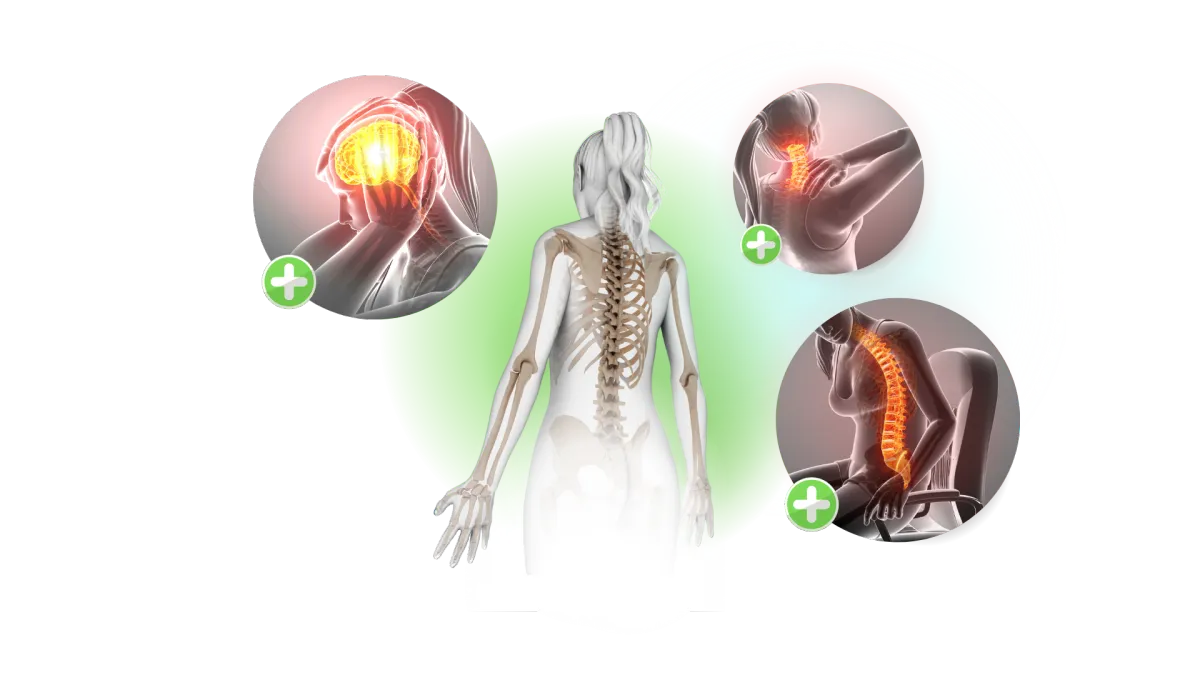
Combining natural hands-on treatment with our week-on-week progressive system to help symptoms like back pain, neck pain and headaches.
Start NOW. Just 1-click away
We help people feel safer and more confident moving again.
Save On Your Treatment Costs
Each visit is £50.
Save if you choose to pre pay.

Start NOW. Just 1-click away
Our clients tell us they can do more of what they enjoy once their pain is under control. Everyone’s different, and results vary.
Peter Bennett, Chiropractor – Registered with the General Chiropractic Council (Reg. No: 01124)
I'm Peter Bennett!
Hello, I’m Peter Bennett, a chiropractor based in Penrith, Cumbria.
I’ve spent more than 25 years helping people reduce pain, move better, and get more life back into their years.
My approach is gentle — no cracking, no heavy-handed adjustments — just safe, effective techniques that work with your body instead of against it.
Over the years, I’ve learned that the human body is incredibly good at trying to heal itself. My job is simply to understand what it’s trying to do and give it the right support.
People come to see me for all sorts of reasons — stiff backs after gardening, neck pain from long hours at a desk, or just feeling less steady than they used to.
Whatever brings you in, my goal is the same: to help you move more easily and feel more confident doing the things you love.
I believe great healthcare starts with kindness, clear explanations, and respect for each person’s pace. You’ll never be rushed or pressured here — just guided gently toward better movement and lasting results.
When I’m not in clinic, I’m usually outdoors walking in the fells, writing about longevity science, or creating online programs that help people stay active and independent later in life.

Why I Do This
When I first started in chiropractic, I thought the job was all about fixing spines.
But over the years, I’ve realised it’s really about helping people trust their bodies again.
I’ve seen how back pain can slowly chip away at someone’s confidence — the way they move, work, even how they laugh. One day it’s just a niggle, and before long it’s changed how they live. Helping someone turn that around, gently and safely, is still the best part of my week.
I’ve always believed the body isn’t broken — it’s doing its best to protect you. My role is to understand what it’s trying to do and guide it back toward balance. That might mean easing tension in the spine, retraining movement, or simply helping you breathe a little easier.
What keeps me going is seeing people realise they can do more than they thought — walking the fells again, picking up grandchildren, or just waking up without that constant stiffness.
It’s those moments that remind me why I chose this path all those years ago.
My aim has never been just to treat backs — it’s to help people move freely, live fully, and enjoy their years with confidence.
FAQS
What conditions can we help with?
Spinal health care can help a wide range of conditions, including back and neck pain, headaches, sciatica, joint pain, and even issues related to posture. It's not just about addressing the symptoms; it's about improving your overall health and well-being by improving the health of your spine and nervous system. If you have specific concerns or questions about your condition, please don't hesitate to ask for a consultation to discuss how spinal health care can benefit you.
Is spinal health care safe, and are the adjustments painful?
Spinal health care is generally considered safe when performed by trained professionals. The adjustments are typically not painful; in fact, many clients report feeling relief and improved mobility after an adjustment. Our therapists are highly skilled and will use gentle techniques tailored to your individual needs. Your comfort and safety are our top priorities, and we will explain every step of the process to ensure you feel at ease during your sessions.
How many visits will I need to see results?
The number of sessions you'll need depends on various factors, including the nature and severity of your condition, your overall health, and your treatment goals. Some clients experience relief after just a few sessions, while others may require more ongoing care. During your initial Spinal Health Assessment, we will assess your specific situation and provide a personalised treatment plan. Our goal is to provide efficient and effective care, so you can return to a pain-free and healthy lifestyle as soon as possible.
When should I see my doctor instead of a chiropractor?
Most back or neck problems are mechanical and respond well to gentle chiropractic care.
See your GP or call NHS 111 if you have fever, weight loss, cancer history, night sweats, recent trauma, numbness in the saddle area, bladder or bowel changes, severe unrelenting pain, or sudden weakness.
Call 999 immediately if you notice stroke signs —
Face drooping, Arm weakness, Speech changes, Time to call 999 (FAST) — or sudden dizziness, vision loss, or a severe new headache.
If you’re unsure, call us — we’ll help you decide the safest next step.
Latest Articles on Spinal Health

How to Identify Root Cause of Back Pain: A Guide
Table of Contents
- Understanding Common Causes of Back Pain
- Red Flag Symptoms That Require Urgent Attention
- When to See a GP for Back Pain
- How Chiropractic Assessment for Back Pain Works
- Sciatica Treatment and Root Cause Identification
- Self-Assessment Steps You Can Take Now
- Why Professional Diagnosis Matters
- Next Steps: Creating Your Path to Relief
- Frequently Asked Questions
Last Updated: 4 October 2026
Understanding Common Causes of Back Pain
Back pain rarely stems from a single incident. The root cause of back pain often traces back to patterns built over months or years. Understanding how to identify root cause of back pain requires examining the habits, postures, and movements that shape your spine's health.
People who understand what's driving their pain recover faster and make targeted changes instead of chasing generic remedies.
Back pain falls into two broad categories: postural and occupational strain, and structural or muscular issues. How you address them depends entirely on which one you're dealing with.
Postural and occupational strain
Poor posture is the invisible architect of chronic back pain. Sitting at a desk with rounded shoulders and head jutting forward trains your muscles to hold tension patterns that persist long after you stand up.
Office work tightens hip flexors, shortens chest muscles, and weakens back extensors. The cumulative effect gradually pulls your spine out of neutral position until poor posture becomes your baseline.
Manual labour places cumulative stress through repetitive bending, twisting, or lifting. A builder, gardener, or care worker's spine absorbs forces day after day in ways that eventually trigger pain.
Postural and occupational strain is usually reversible and responds to movement changes, strengthening, and habit shifts.
Muscular versus structural issues
A muscle strain feels like a sharp ache or stiffness, often localised to one area, and typically improves within two to four weeks with rest and gentle movement.
Structural issues involve bones, discs, joints, or ligaments and can develop quietly. Structural pain often feels deeper, more persistent, and may radiate outward without improving with rest alone.
Identifying the root cause of back pain matters because muscular and structural issues require different approaches. Treating the wrong diagnosis leads to frustration and prolonged discomfort.
Red Flag Symptoms That Require Urgent Attention
Some back pain signals something that needs immediate professional assessment. These aren't common, but they're important to recognise.
Seek urgent medical attention for numbness or tingling spreading down your leg, loss of bladder or bowel control, severe unrelenting pain, pain following significant trauma, or unexplained weight loss with back pain.
Fever with back pain, progressive leg weakness, or night pain warrants prompt assessment.
Red flags mean you need professional evaluation to rule out serious conditions. Get clarity fast rather than waiting.
When to See a GP for Back Pain
When to see a GP depends on how long your pain has lasted, how much it's affecting daily life, and whether self-management is working.
If back pain persists beyond two weeks without improvement from rest and over-the-counter relief, consult your GP. Early assessment helps identify the root cause before compensation patterns develop.
Visit your GP sooner if pain prevents work, sleep, or daily activities. Your GP can rule out serious conditions and discuss tailored treatment options.
GPs often refer to physiotherapy first. Physiotherapists identify postural and movement patterns contributing to pain. If physiotherapy doesn't resolve your issue, further investigation may be appropriate.

How Chiropractic Assessment for Back Pain Works
A thorough chiropractic assessment for back pain is detective work focused on understanding your unique situation and identifying what's driving your discomfort.
What a thorough assessment includes
A chiropractic assessment for back pain begins with detailed conversation about your pain, work, hobbies, sleep position, and daily habits. These details often reveal the root cause before physical examination.
Physical examination includes posture analysis and range of motion assessment. Restricted movement in specific directions often points to particular structures or patterns.
Palpation, careful hands-on examination of your spine, identifies areas of tension, misalignment, or restriction. Experienced hands detect subtle changes machines cannot.
Imaging may be recommended to reveal structural issues, but many cases improve without scans because the root cause is movement-related, not structural.
Why understanding your history matters
Your history is crucial. Previous injuries can leave scar tissue or movement restrictions. Work history, posture habits, fitness level, and stress all accumulate and manifest in spine tension.
At Your Spinal Health, we spend time understanding your complete picture because the root cause of back pain is often hidden in the details of how you live.
This comprehensive understanding allows your chiropractor to create a treatment plan that addresses the actual cause, not just the symptom.
Sciatica Treatment and Root Cause Identification
Sciatica is back pain with a twist, literally. When a nerve becomes irritated or compressed, pain radiates down your leg following the nerve's path. Sciatica treatment requires identifying which nerve is involved and why it's being compressed or irritated.
Book Your Spinal Health Assessment →
The sciatic nerve is the longest nerve in your body. It runs from your lower back, through your buttocks, and down each leg. When something irritates this nerve, whether a bulging disc, tight muscles, or misalignment, you feel pain that travels. Some people describe it as burning, shooting, or electric. Others report numbness or tingling.
Identifying the root cause of sciatica means determining what's actually compressing the nerve. Is it a disc? A muscle? A combination of factors? Different causes require different sciatica treatment approaches. A bulging disc might need specific movement strategies or, in some cases, more intensive intervention. Muscle tightness often responds to stretching and release work. Misalignment might improve with adjustments and postural correction.
The good news is that sciatica treatment often succeeds once the root cause is identified.
Self-Assessment Steps You Can Take Now
Before you see a professional, you can gather valuable information about your own pain. Self-assessment won't give you a diagnosis, that requires professional evaluation, but it will help you understand your situation better and communicate more effectively with your healthcare provider.
Tracking pain patterns and triggers
Start a simple pain log. Note when your pain occurs, what you were doing beforehand, what makes it better, and what makes it worse. Does it hurt more after sitting? After activity? First thing in the morning? At the end of the day?
Notice which movements trigger pain. Can you bend forward without discomfort? Does twisting hurt? Does lying down help or make it worse? Does walking ease your pain or worsen it? These movement responses tell a story. A pain that worsens with forward bending suggests different structures than pain that worsens with backward bending.
Pay attention to your posture throughout the day. Do you slouch at your desk? Do you favour one side? Do you cross your legs when sitting? These habitual positions often contribute directly to pain. Simply noticing them is the first step towards change.
Track your activity level too. Did your pain start when you increased exercise? When you changed jobs? When you started a new hobby? Correlation isn't causation, but timing often provides clues.
Distinguishing muscular soreness from nerve-related pain
Muscular pain typically feels like an ache or stiffness. It's usually localised to one area. It often improves with gentle movement and worsens after prolonged inactivity. Muscular soreness from exertion feels similar to soreness you'd experience in your arm after lifting weights. Maintaining this mobility through regular functional fitness exercises helps to prevent the cycle of stiffness from becoming a chronic issue.
Nerve-related pain feels different. It often radiates outward from a central point. You might experience tingling, numbness, or a burning sensation alongside pain. Nerve pain sometimes follows a specific pattern, down your leg, across your buttock, into your foot. It might feel sharp or electric rather than a dull ache.
This distinction matters because it guides your next steps. Muscular pain often improves with appropriate stretching and strengthening. Nerve pain requires identifying what's compressing the nerve and addressing that root cause.
Why Professional Diagnosis Matters
Self-assessment is valuable, but it has limits. Your brain is remarkably skilled at interpreting pain signals, but it can't see inside your spine. It can't identify whether your disc is bulging, whether your facet joints are irritated, or whether scar tissue is restricting movement.
Professional diagnosis, whether from your GP, a physiotherapist, or a chiropractor, adds objective information to your subjective experience. A professional can perform tests and assessments that reveal things you can't feel. They can compare your movement to normal ranges. They can palpate structures and feel what's happening beneath the surface.
More importantly, a professional helps you understand the root cause of back pain in context. They explain not just what's wrong, but why it happened and what you can do about it. This understanding is what transforms treatment from guesswork into a coherent plan.
According to guidance from the National Institute for Health and Care Excellence (NICE) on low back pain management, early professional assessment and movement-based approaches lead to better long-term outcomes than delayed care or passive treatment alone.
Next Steps: Creating Your Path to Relief
You now understand that identifying the root cause of back pain requires looking beyond the obvious. It means examining your posture, your movements, your habits, and your history.
Your next step depends on where you are right now. If your pain is recent and mild, self-assessment combined with movement changes might be sufficient. If your pain has persisted beyond two weeks or is affecting your daily life, consulting your GP is a sensible move.
When you're ready for a deeper assessment, one that focuses specifically on understanding your unique situation and creating a personalised plan, that's when a chiropractic assessment for back pain becomes valuable.
Back pain doesn't have to be permanent, and relief doesn't require guesswork. It requires understanding.
Your spine's health is worth investing time in understanding. Book your spinal health assessment with Your Spinal Health and discover exactly what's driving your pain, and more importantly, what you can do about it.
Back pain often feels like a mystery, but it rarely is. The root cause is usually hiding in plain sight, in your posture, your movements, your habits, or your history.
Frequently Asked Questions
When should I see a GP about back pain?
See your GP if back pain persists beyond six weeks, follows an injury or fall, causes numbness or tingling in your legs, affects bladder or bowel control, or is accompanied by unexplained weight loss or fever. Your GP can rule out serious conditions and refer you to specialists if needed. For acute pain that doesn't improve with rest and over-the-counter pain relief within a few days, an early appointment is sensible.
How can I tell if my back pain is muscular or spinal?
Muscular pain typically feels like a dull ache, worsens with specific movements, and improves with rest and gentle stretching. Spinal or nerve-related pain often radiates down the leg, feels sharp or burning, and may include numbness or tingling. Muscular pain is usually localised to one area, whilst nerve pain follows a specific pathway. A professional assessment can confirm the source and guide appropriate treatment.
What does a chiropractic assessment for back pain involve?
A thorough chiropractic assessment includes discussing your medical history, current symptoms, and lifestyle factors. The chiropractor performs physical examinations, checking your posture, range of motion, and spinal alignment. They may use orthopaedic tests to identify the source of pain. Imaging or referral to your GP may be recommended if needed. This detailed approach identifies the root cause rather than just treating symptoms.
Can sciatica treatment address the underlying cause?
Effective sciatica treatment identifies what's compressing the sciatic nerve, whether that's a bulging disc, muscle tension, or misalignment. Treatment may include gentle adjustments, targeted exercises, and postural corrections to relieve pressure on the nerve. Addressing the root cause helps prevent recurrence and provides lasting relief rather than temporary symptom management. Your healthcare provider can recommend the best approach for your specific situation.
What lifestyle factors contribute to chronic back pain?
Prolonged sitting, poor posture, weak core muscles, and repetitive strain from manual work all contribute to chronic back pain. Stress, inadequate sleep, and low activity levels can worsen symptoms. Overweight or obesity places extra load on the spine. Identifying which factors apply to you helps target treatment and prevention. Small changes in daily habits often make a significant difference to long-term spinal health.
How long does it take to identify the root cause of back pain?
Identifying the true root cause sometimes requires observing how your pain responds to initial treatment and lifestyle adjustments over one to two weeks. Some causes are immediately apparent from examination and history, whilst others emerge as you track patterns and triggers. Patience and detailed communication with your healthcare provider support accurate diagnosis.