How Stress Causes Migraines (And What To Do About It)
Introduction
When people talk about stress and migraines, it often sounds vague.
“Try to relax.”
“Reduce stress.”
But that’s not particularly helpful.
Because stress is not just something you think.
It’s something your body does.
And when you understand what stress is doing physically, the connection to migraines becomes much clearer.
Stress Is a Physical State (Not Just Mental)
When you’re under stress, your body changes immediately.
Without you noticing, it:
tightens muscles
changes your breathing
increases alertness
reduces recovery processes
This is useful in short bursts.
It helps you respond quickly when needed.
But most people are not experiencing short bursts.
They are experiencing low-level stress all day, every day.
What That Does to Your Body Over Time
If stress continues:
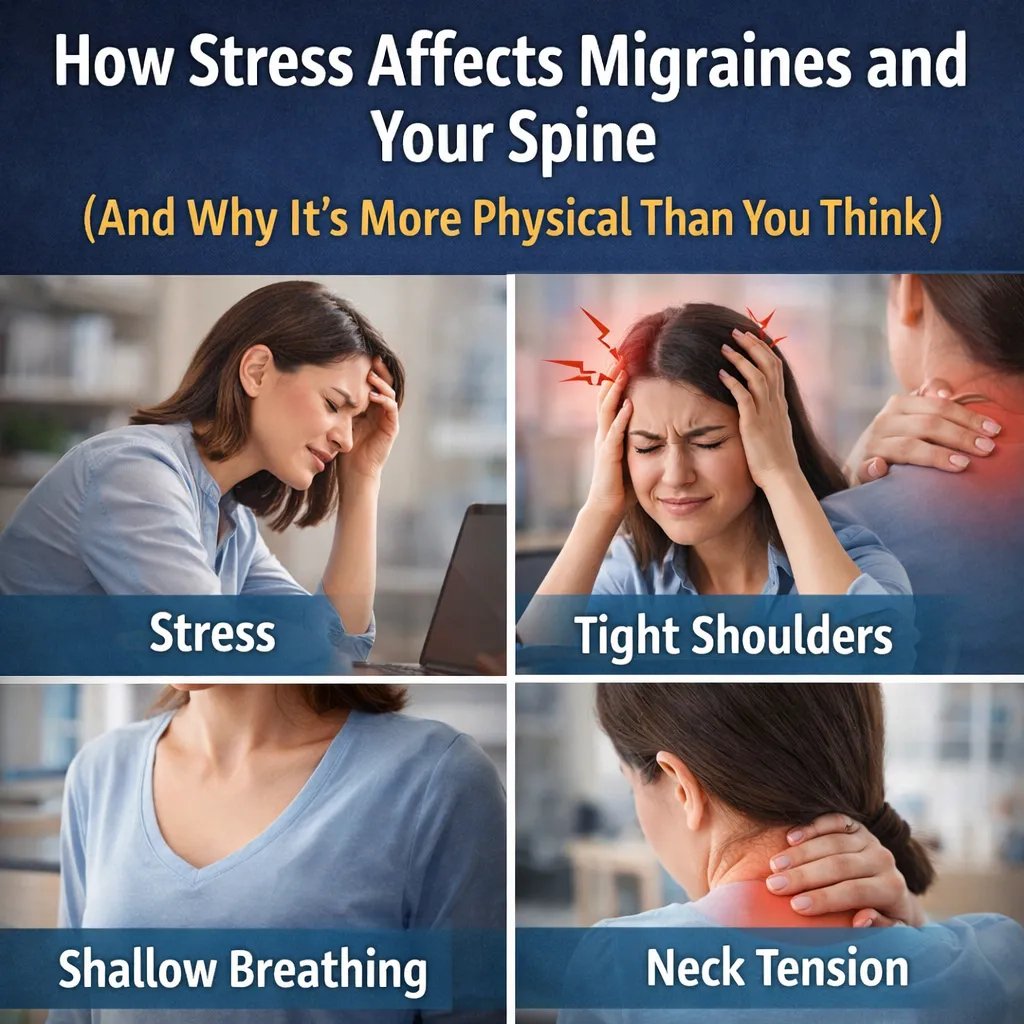
muscles stay slightly tight
breathing stays shallow
your nervous system stays “on alert”
This creates a constant background load.
It doesn’t feel dramatic.
But it accumulates.
And your body has to carry it continuously.
Where Stress Shows Up Physically
Most people carry stress in predictable places:
neck
shoulders
upper back
jaw
You might notice:
tight shoulders at the end of the day
a heavy feeling in your neck
difficulty fully relaxing
These are not random.
They are your body adapting to ongoing pressure.
How This Links to Migraines
As this tension builds:
movement becomes more restricted
muscles work harder to stabilise
the nervous system becomes more sensitive
Over time:
→ your system becomes easier to trigger
→ your recovery becomes less effective
→ migraines become more likely
Again, not suddenly.
Gradually.
The Breathing Pattern Most People Don’t Notice
One of the biggest hidden factors is breathing.
Under stress, breathing becomes:
faster
shallower
higher in the chest
This reduces oxygen efficiency and increases tension in the neck and shoulders.
So even when you’re “resting,” your body is still working harder than it needs to.
Why You Can’t Just “Switch Off”
This is where people get frustrated.
They try to relax.
But their body doesn’t follow.
Because stress is not just a thought.
It’s a state your nervous system has adapted to.
And once that state becomes familiar, your body stays there automatically.
The Load vs Recovery Perspective
Stress is one of the biggest contributors to load.
If your total load is high:
your body holds more tension
your spine comes under more strain
your nervous system becomes more reactive
At the same time:
recovery reduces
sleep becomes less restorative
tension doesn’t fully release
This combination is what drives migraines.
Where the Spine Comes In
Your spine is central to how your body manages stress.
Because it:
protects your nervous system
coordinates movement
regulates muscle tone
When your spine is under strain:
your body finds it harder to relax
tension patterns become more fixed
your system stays in a more reactive state
This makes the effects of stress much stronger.
Why Stress Feels Worse Over Time
Many people notice:
“I used to cope better.”
“I don’t bounce back like I used to.”
That’s because:
→ the load has been building
→ recovery has been slipping
→ your system is closer to its limit
So the same level of stress now has a bigger impact.
What Actually Helps (In Practical Terms)
Telling someone to “reduce stress” is not useful.
But changing how your body handles stress is.
1. Reduce Physical Tension
regular movement
changing position throughout the day
avoiding long periods of stillness
2. Improve Breathing Without Overthinking It
slow down slightly
allow breathing to drop lower (into the abdomen)
avoid holding your breath during tasks
3. Create Small Recovery Points
Not big changes.
Small ones.
short breaks
stepping away from screens
brief moments where your body can settle
4. Support Your Spine
When spinal function improves:
tension reduces more easily
your nervous system becomes less reactive
your body can switch out of stress more effectively
What People Often Notice First
When this begins to change:
shoulders drop without effort
breathing feels easier
less constant tension
better sleep
These are signs your system is coming out of that stressed state.
Migraines often reduce after that.
Why This Works
Because it addresses the root pattern.
Not just the symptom.
You’re not trying to eliminate stress completely.
You’re improving your ability to cope with it.
When This Is Most Relevant
This is especially important if:
your migraines follow stressful periods
you feel physically tense most of the time
you struggle to relax even when you try
your symptoms have built up over time
Start Here
If you want to understand how stress is affecting your body physically:
👉 https://yourspinalhealth.com/
Related Articles
https://yourspinalhealth.com/post/why-migraines-build-over-time
https://yourspinalhealth.com/post/neck-tension-and-headaches
The Next Step
The next step is to assess how your spine is coping with the load your body is under.
I will assess your spine and discover if treatment could help:
👉 https://yourspinalhealth.neptune.practicehub.io/p/book-online?atid=448
