Can Neck Tension Cause Migraines? (Simple Explanation)
Introduction
If you suffer with migraines, there is a very good chance you’ve noticed this:
→ your neck feels tight
→ your shoulders feel heavy
→ your head feels “full” or pressured
And often, just before a migraine starts, that tension increases.
That’s not a coincidence.
Neck tension is one of the most common contributors to migraines.
Not as a single cause.
But as part of a pattern that builds over time.
Why the Neck Matters So Much
Your neck is not just a support structure for your head.
It is one of the most neurologically sensitive areas in your body.
This is where:
signals pass between your brain and body
balance is coordinated
muscle tone is constantly adjusted
Your head weighs around 4–5kg.
When it is positioned well, your body handles that easily.
When it drifts forward — even slightly — the load increases dramatically.
What Happens When Tension Builds
When your neck is under ongoing strain, your body adapts.
It does this intelligently.
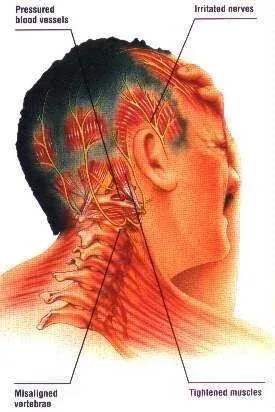
It tightens muscles to protect the area.
That tightening:
stabilises the spine
reduces movement
prevents further strain (short term)
But over time:
→ the muscles stay tight
→ movement becomes restricted
→ sensitivity increases
And that is where migraines begin to emerge.
The Common Pattern Most People Live In
For many people, the pattern looks like this:
long periods sitting
head slightly forward
shoulders slightly rounded
low-level stress in the background
Nothing extreme.
But it happens every day.
Your body adapts to this.
Then:
muscles tighten
joints stiffen
circulation changes
the nervous system becomes more alert
And slowly, the system becomes overloaded.
Why It Feels Like It Comes From Your Head
Even though the problem is building in the neck, the symptoms are often felt in the head.
That’s because:
the nerves in the neck connect closely with the head
tension patterns refer upwards
the brain interprets the signals as head pain
So the migraine feels like a “head problem.”
But often, it has been developing lower down.
Why Stretching Alone Often Doesn’t Work
Many people try to stretch their neck.
Sometimes it helps briefly.
But often, the tension returns quickly.
That’s because the tightness is not random.
It is protective.
Your body is tightening those muscles for a reason:
→ to support an area under strain
If you only stretch:
you temporarily reduce tension
but the underlying reason remains
So the body tightens again.
The Load vs Recovery Perspective
This is where everything becomes clearer.
Your neck is responding to total load.
That includes:
posture
work demands
emotional stress
previous injuries
lack of movement
If that load exceeds your recovery capacity:
→ tension builds
→ sensitivity increases
→ migraines become more likely
What Actually Reduces Neck Tension Long Term
To reduce tension properly, you need to change the conditions that created it.
1. Reduce Sustained Load
break up long periods of sitting
bring your head back over your body regularly
avoid holding one position for too long
2. Improve Movement
gentle, regular movement is far more effective than occasional stretching
your body needs variation, not force
3. Support the Spine
When spinal function improves:
muscles don’t need to overwork
tension reduces naturally
your system becomes less reactive
This is where chiropractic care can help.
What People Often Notice
When this starts to change, people often say:
“My neck feels lighter”
“I’m not holding as much tension”
“My shoulders have dropped”
These are early signs that the system is settling.
Migraines often reduce after that.
Why This Approach Works Better
Because it doesn’t fight the body.
It works with it.
Instead of trying to force tension away, it:
→ reduces the need for the tension
And when the body no longer needs to protect itself in that way, it lets go.
When This Is Most Relevant
This is especially important if:
your migraines start in the neck
you feel tight across your shoulders
you sit or work at a desk
your symptoms build gradually rather than suddenly
you often feel like you “can’t fully relax”
Start Here
If you want to understand how your neck and spine are contributing:
👉 https://yourspinalhealth.com/
Related Articles
The Next Step
The next step is to assess how much tension your spine is under and whether it is affecting your system.
I will assess your spine and discover if treatment could help:
👉 https://yourspinalhealth.neptune.practicehub.io/p/book-online?atid=448
